
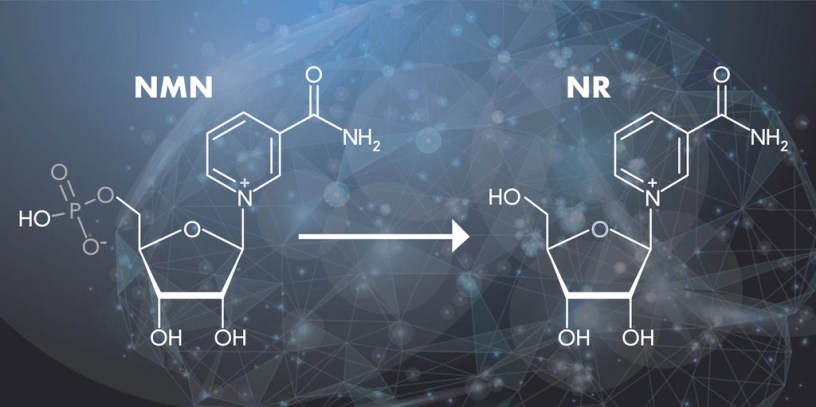
Boosting NAD+ levels is essential for maintaining cellular health, energy production, and longevity. NAD+ is a critical coenzyme involved in numerous biological processes, such as DNA repair, metabolism, and overall cellular function. As people look for ways to increase NAD+ levels, the discussion frequently revolves around NMN vs NR. These two supplements, while both effective, have distinct differences in their mechanisms and benefits.
Let us understand these differences to help you make an informed decision while improving your overall health and well-being.
Molecular structure
NMN (Nicotinamide Mononucleotide) is a larger molecule compared to NR (Nicotinamide Riboside). NR is a precursor to NAD+ and needs to be converted into NMN before becoming NAD+. NMN, on the other hand, is closer in structure to NAD+, making it a direct precursor.
Conversion efficiency
NR requires an additional conversion step in the body to become NMN before it can be utilized to boost NAD+ levels. This extra step can make NR slightly less efficient compared to NMN, which directly converts to NAD+.
Absorption rates
NMN and NR differ in how they are absorbed by the body. NR is smaller and more easily absorbed through the digestive system, while NMN may require a transporter to enter cells. This difference can influence how quickly and effectively each supplement raises NAD+ levels.
Availability and research
NR has been available longer and is backed by more research studies compared to NMN. While NMN is gaining popularity, NR remains the more widely studied and available supplement for boosting NAD+ levels.
Cost considerations
NMN is often more expensive than NR due to its more complex production process and recent popularity. Cost can be a significant factor when deciding which supplement to incorporate into your routine.
Final thoughts
Both NMN and NR offer benefits for boosting NAD+ levels, but they differ in structure, conversion, absorption, research backing, and cost.
 News Health Blog